


Dialectical Behavior Therapy (DBT) is an evidence-based treatment developed by psychologist Dr. Marsha Linehan to support individuals diagnosed with borderline personality disorder and those struggling with chronic suicidal thoughts or self-harming behaviors.
Since its development, DBT has been widely adapted and is effectively used to treat a range of mental health conditions, including anxiety, depression, eating disorders, substance use, and PTSD.
Comprehensive DBT involves the structured delivery of four core treatment components, as originally developed by Dr. Marsha Linehan. This model ensures alignment with DBT’s evidence-based framework and includes the following components:
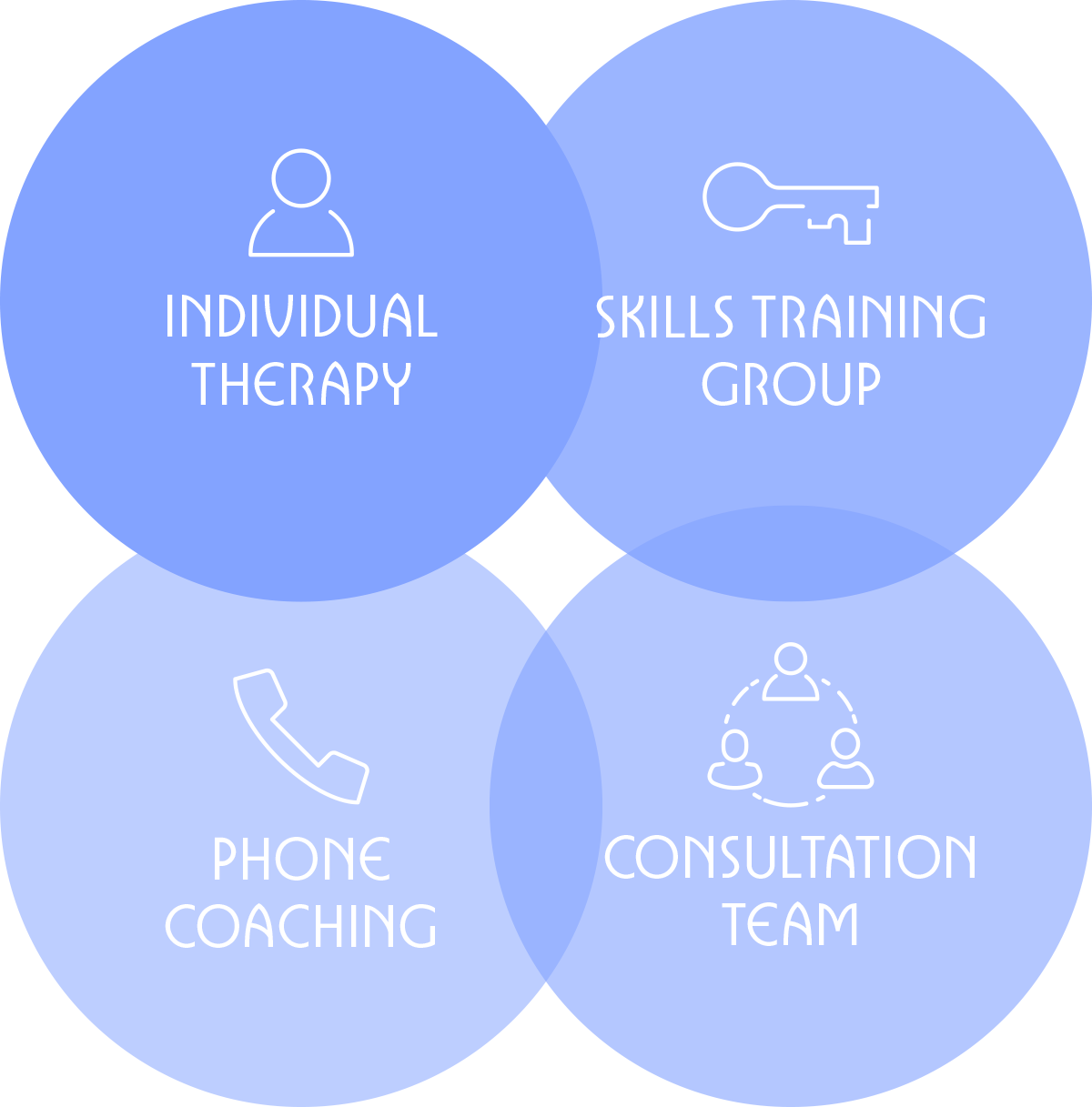
Individual Therapy
Weekly sessions focused on addressing personal challenges and applying skills to real-life situations.
Skills Training Group
A structured group where clients learn and practice four core modules:
- Mindfulness: Cultivating present-moment awareness and emotional acceptance
- Distress Tolerance: Developing strategies to manage crises without engaging in harmful behaviors
- Emotion Regulation: Learning techniques to understand, manage, and reduce emotional intensity
- Interpersonal Effectiveness: Enhancing communication skills, assertiveness, boundary-setting, and the ability to maintain healthy relationships
Phone Coaching
As-needed support between sessions to help clients apply skills in real-time, day-to-day situations.
Consultation Team
A weekly meeting for DBT therapists to support one another, maintain adherence to the model, and promote clinical effectiveness.
What Are Adherence and Fidelity in DBT, and Why Are They Important?
While many therapists incorporate elements of DBT into their therapeutic work, not all provide the full, evidence-based model as originally designed. Comprehensive DBT integrates all four core treatment components: individual therapy, skills training groups, phone coaching, and consultation team.
Adherence and fidelity are crucial concepts within the DBT model, each referring to different elements of how the treatment is applied and delivered.
Adherence involves strictly following the structured protocols and components of DBT as developed by Dr. Marsha Linehan, ensuring the treatment is applied with accuracy and consistency.
Fidelity refers to delivering DBT in a way that maintains both the technical accuracy and the underlying spirit of the model, ensuring it is applied effectively to achieve meaningful outcomes.
Maintaining both adherence and fidelity is essential for achieving the evidence-based results that DBT is known for, with research indicating that programs delivered with greater fidelity are predictive of better overall outcomes.